
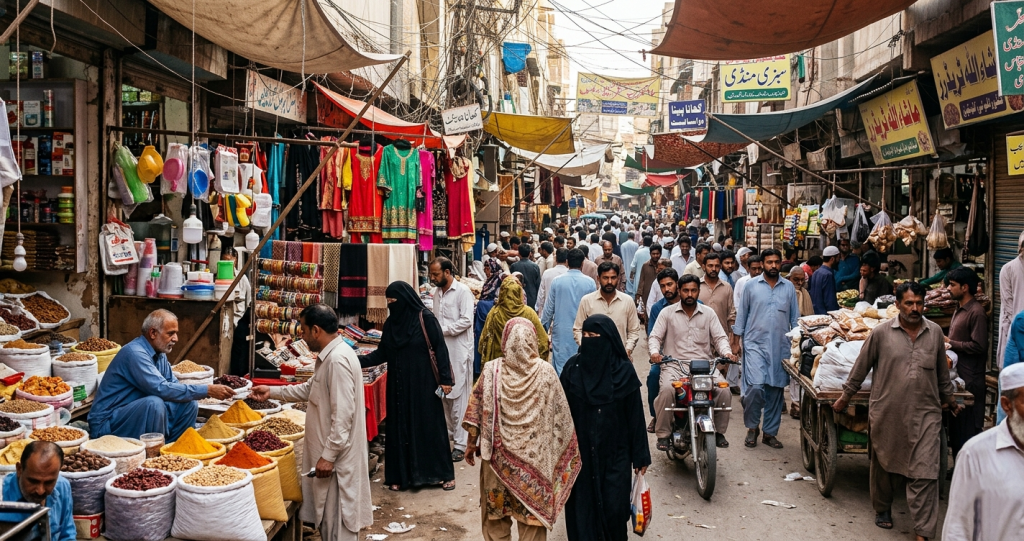
Pakistan has been facing persistent economic challenges marked by inflation, unemployment, currency depreciation, and rising poverty. These conditions have given rise to what is commonly referred to as a struggle economy — where households and businesses focus primarily on survival rather than growth. This article examines the key factors contributing to Pakistan’s economic struggle and explores practical survival strategies adopted by individuals, communities, and small enterprises. It also highlights structural issues, social adaptations, and policy-level needs to improve economic resilience.
Introduction
Over the past decade, Pakistan’s economy has experienced repeated shocks due to political instability, global economic pressures, climate disasters, and structural weaknesses. Rising living costs and stagnant incomes have made it increasingly difficult for ordinary citizens to meet basic needs. The term struggle economy reflects a condition where economic activity is driven by necessity, informal work, and short-term coping mechanisms rather than long-term development.
Understanding this struggle economy is essential for identifying sustainable survival strategies and policy interventions that can help stabilize livelihoods and promote inclusive growth.
“The struggle economy reflects a condition where economic activity is driven by necessity, informal work, and short-term coping — not long-term development.”
Key Factors Behind Pakistan’s Struggle Economy
Inflation and Cost of Living
High inflation has significantly increased the prices of food, fuel, electricity, and housing. Middle- and lower-income households are disproportionately affected, as wages have not kept pace with rising costs. Essential goods such as wheat, cooking oil, and medicine consume a large share of household income.
Unemployment and Underemployment
Pakistan’s labor market struggles to absorb a rapidly growing population. Many educated young people face unemployment, while others are underemployed in low-paying or informal jobs. The lack of stable employment pushes individuals toward daily-wage labor, freelancing, or small informal businesses.
Currency Depreciation and Debt
The depreciation of the Pakistani rupee has increased the cost of imports and external debt servicing. This weakens industrial productivity and raises prices for consumers, further squeezing household budgets.
Energy Crisis
Frequent electricity shortages and high energy tariffs disrupt industrial output and small businesses. Load-shedding increases production costs and reduces working hours, especially for small-scale enterprises that cannot afford backup generators.
Social and Household-Level Survival Strategies
Income Diversification
Many families rely on multiple income sources, such as part-time jobs, freelancing, home-based businesses, and ride-hailing services. Women increasingly contribute through online work, tailoring, teaching, and food businesses, expanding the household income base.
Informal Economy Participation
The informal sector plays a crucial role in survival. Street vending, small retail shops, and daily wage labor provide immediate income despite lacking job security or legal protection. For many urban households, the informal economy is not a last resort — it is the primary economy.
Reduced Consumption and Lifestyle Adjustments
Households adapt by cutting non-essential expenses, shifting to cheaper food alternatives, reducing energy use, and sharing living spaces with extended family members. These micro-level adjustments collectively shape a new normal of restrained consumption.
Remittances
Remittances from overseas Pakistanis are a major survival support. Many families depend on foreign income to manage education, healthcare, and daily expenses, making remittances one of Pakistan’s most reliable financial lifelines.
Business and Community-Level Adaptations
Small-Scale Entrepreneurship
Micro-businesses such as online stores, mobile repair shops, and food delivery services have grown due to low startup costs and accessibility through digital platforms. These ventures often operate informally, filling gaps that larger enterprises leave behind.
Community Support Systems
Informal community networks — including interest-free loan circles (committee systems), charitable organizations, and religious institutions — help vulnerable groups cope during economic hardship. These traditional safety nets remain deeply embedded in Pakistani society.
Digital and Freelance Economy
Freelancing in IT, content writing, graphic design, and digital marketing has emerged as a survival pathway for educated youth. Online platforms provide access to global markets despite local economic constraints, with Pakistan consistently ranking among the world’s fastest-growing freelancing nations.
“Online platforms provide educated Pakistani youth access to global markets despite local economic constraints.”
Role of Government and Policy Needs
Social Protection Programs
Initiatives such as cash transfer programs and subsidized utilities help mitigate extreme poverty. However, coverage and transparency need improvement to ensure benefits reach the most vulnerable segments of the population.
Economic Reforms
Structural reforms in taxation, energy pricing, and industrial policy are essential to reduce inequality and encourage investment. Without systemic reform, short-term survival strategies remain the only option for most citizens.
Skills Development
Investment in vocational training and digital skills can improve employability and reduce reliance on informal work. Building a workforce equipped for the modern economy is among the most impactful long-term interventions available.
Conclusion
Pakistan’s struggle economy reflects deep-rooted structural and governance challenges combined with external pressures. While individuals and communities have shown remarkable resilience through adaptive survival strategies, long-term economic stability requires comprehensive reforms, inclusive policies, and sustained investment in human capital.
Strengthening employment opportunities, controlling inflation, and supporting small businesses are critical steps toward transforming survival into sustainable growth.

Sarah Batool
Sarah Batool is an MSc graduate in Defence and Strategic Studies from Quaid-e-Azam University, with internship experience at PICSS. She focuses on international relations, defence, and global affairs.