
Interview by Fariya Shahid (RO) – Nojwan Youth Success Stories
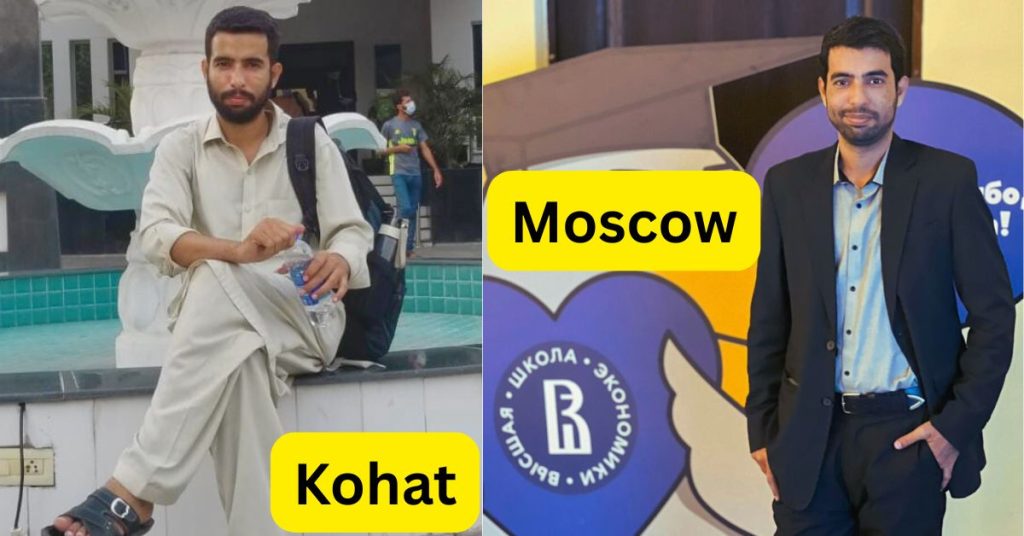
Bilawal Bangash was born in Kohat, Khyber Pakhtunkhwa, and later moved with his family to Karachi, carrying the weight of being the eldest son in a family of six siblings. His father did not have a stable, high-income job, but still chose to prioritise education over comfort, shaping Bilawal’s belief that learning could change his life. Today, after years of CSS failures, a lost scholarship, and intense pressure, Bilawal is studying International Trade and Dispute Resolution Law in Moscow turning his journey into a real-life success story interview that can inspire the youth of Pakistan.
This real-life success story is based on an in-depth interview with Bilawal Bangash. Below are selected questions and answers, followed by a narrative of his journey for the Nojwan Youth Success Stories series.
Interview: Questions and Answers with Bilawal Bangash
Q: Can you share a brief introduction about yourself, where did you study and what are you currently doing?
Bilawal: I am currently studying a Master’s (MPhil) in International Trade and Dispute Resolution Law at the National Research University Higher School of Economics (HSE) in Moscow. Before this, I studied Earth Sciences and completed my Master’s in International Relations in 2022.
Q: What work are you currently doing specifically, and what has been your favourite part of this experience so far?
Bilawal: I am focused on studying law especially how different countries design their legal systems and trade laws. I really enjoy visiting courts, attending seminars and conferences, and going on practical academic visits. These experiences help me see how legal concepts work in real life.
Q: Why did you decide to pursue this career and field of study?
Bilawal: Studies and research have always been central in my life. My interest in learning and understanding systems pushed me towards this career. Law, especially international trade and dispute resolution, connects my interest in global affairs with a clear professional path.
Q: What are the essential skills that helped you launch this journey, and what key skills have you developed after joining this institute?
Bilawal: Skills related to arbitration and trade law, building strong legal vocabulary, understanding concepts clearly, and practical skills from court visits and seminars have helped me a lot. These skills allow me to follow complex discussions and apply what I learn.
Q: What do you think is the most crucial factor behind your progress experience, mindset, or something else?
Bilawal: For me, commitment, perseverance, and patience have been the most important. They helped me continue after CSS failures and even after losing a scholarship opportunity.
Q: Who motivated you the most while you were building your career? Where did you find inspiration to continue?
Bilawal: My biggest motivation came from within. My dream was my main source of strength, and I kept motivating myself. At the same time, my father’s sacrifices and his wish to see me successful always pushed me forward.
Q: How do your current studies fit into your long-term professional goals?
Bilawal: I am satisfied with my field and feel I have a secure future. My current studies are directly linked to my long-term goal of working in international trade and law, especially in resolving complex disputes.
Q: What is the most important advice you would like to share with the next generation of Pakistani youth?
Bilawal: Don’t let external pressure break you. Build pressure from within through your dreams, discipline, and determination like a chick breaking the eggshell from the inside. Your future is in your hands, not anyone else’s.
Early Life in Kohat, Family Struggles, and the Education Journey
Bilawal is originally from Kohat in Khyber Pakhtunkhwa, where he completed his primary education in a village school before his father decided to send him to the city for higher studies. His family later settled in Karachi, but the roots of his story remain in that village, where opportunities were limited and education was not guaranteed for everyone. Despite having no “handsome income” or stable job, his father invested in his children’s education, a decision that shaped Bilawal’s mindset and long-term vision.
Growing up with three sisters and three brothers, he felt the dual pressure of being among the eldest and being expected to “make it” so he could support the rest. Over time, his academic path moved across multiple disciplines: he studied Earth Sciences, completed his Master’s in International Relations (IR) in 2022, and is now pursuing law. He describes the years from 2017 to 2025 as the most pressurised phase of his life, defined by high expectations, repeated setbacks, and constant emotional and mental strain.
During this period, he attempted the CSS exam twice, in 2017 and 2018, travelling to Lahore for preparation. Both attempts ended in rejection. In 2024, he received a scholarship offer but lost it because the required documents were not submitted in time, a small procedural mistake with major consequences. For many students, that combination of exam failures and a lost opportunity would be enough to stop trying. For Bilawal, it became a tough but powerful training ground in patience, responsibility, and resilience.
From Rejection to Moscow: How Persistence Paid Off
Despite nearly a decade of pressure, Bilawal refused to abandon his academic ambitions. In October 2025, his persistence turned into a breakthrough when he secured admission at the National Research University Higher School of Economics (HSE) in Moscow. There, he is now pursuing a Master’s (MPhil-level) degree in International Trade and Dispute Resolution Law.
This field sits at the intersection of law, trade, and international relations, aligning closely with his earlier academic background and long-standing interest in global systems. For a student who once sat in a village classroom in Kohat and later faced repeated CSS failures and a lost scholarship, walking the halls of a leading Russian university is not only a personal victory it is a powerful symbol of what consistent effort can achieve.
Life as a Law Student in Moscow
When he introduces himself today, Bilawal describes his life as a law student at HSE in Moscow. His program focuses on how countries design trade laws, how disputes arise, and how those disputes are resolved through arbitration and other legal processes.
His favourite part of this journey is the strong practical dimension of his studies. He spends his days:
- Studying the laws of different countries and comparing their approaches to trade and dispute resolution
- Visiting courts to observe real legal proceedings and see how legal theories are applied
- Attending seminars and conferences where experts discuss current issues in international law and trade
- Participating in practical academic visits that help him connect classroom learning with the realities of the legal system
These experiences turn law from a purely theoretical subject into a living, dynamic field in which decisions affect economies, businesses, and people across borders. For Bilawal, this practical exposure is what makes his academic journey deeply rewarding.
Why Bilawal Bangash Chose International Trade and Dispute Resolution Law
When asked why he selected this field, Bilawal points to two main forces: his love for studies and his passion for research. He sees education as more than a requirement; it is his way of understanding how systems work and finding a meaningful place within them. Moving from Earth Sciences to International Relations and then to Law may look unconventional, but for him each step brought him closer to the intersection of global politics, economics, and law.
He explains that his current field gives him a clear and stable direction. It fits his interests, aligns with his academic background, and offers strong professional prospects. He feels satisfied with his field of study and believes it connects directly with his long-term goals, giving him a sense of stability and purpose after many uncertain years.
Skills and Inner Qualities That Made the Difference
Success in a specialised program like International Trade and Dispute Resolution Law requires more than grades. Over time, Bilawal has built a combination of academic skills and inner qualities that support his journey.
Academic and Professional Skills
- Arbitration and trade law skills – Through his studies, he has developed a foundation in arbitration and trade law, understanding how disputes between states, companies and institutions arise and how they can be resolved fairly through legal mechanisms.
- Vocabulary and legal concepts – Law is a language-heavy field. Expanding his vocabulary and gaining clarity on complex legal and trade concepts have been essential for reading advanced texts, participating in class, and writing at a high level.
- Practical work skills – Court visits, conferences and academic trips have helped him connect theory with practice, observe professional behaviour in legal settings, and understand the procedural flow of real cases.
Inner Qualities Behind His Success
When he reflects on what truly helped him reach this stage, Bilawal highlights three inner qualities:
- Commitment – staying loyal to his goals even when results were delayed or disappointing
- Perseverance – continuing to try after CSS failures and a lost scholarship opportunity
- Patience – accepting that meaningful progress can take years of consistent effort
These traits turned long periods of pressure into a slow but steady climb instead of a permanent defeat.
Trust, Censorship, and Youth Voices Online: What 2026 Means for Young Pakistanis
Motivation for Pakistani Youth: Build Pressure from Within
One of the most powerful parts of Bilawal’s story is the metaphor he shares for the youth of Pakistan: the egg.
He explains that if you press an egg from the outside, it cracks and breaks into pieces. This represents how external pressure, criticism, hardship and toxic expectations can destroy a person if they allow it to define them. But when pressure builds from inside the egg, something completely different happens: new life breaks free. For Bilawal, this is the difference between destruction and creation.
His message to Pakistani youth is clear:
- Do not let the outside world break you, no matter how loud the criticism or how difficult the situation.
- Build pressure from within through your own goals, discipline and hunger for success.
- Let your desire to make your parents proud and prove people wrong become a positive force, not a burden.
- Keep your inner fire alive, even when results are delayed and progress feels slow.
He reminds young people that when a chick is ready to hatch, it breaks the shell from the inside with its own strength. In the same way, your breakthrough must come from your own inner power. Your future, he insists, is not in anyone else’s hands it is in yours.
Key Lessons for Pakistani Youth from Bilawal Bangash’s Journey
- Failure in CSS or any exam is not the end; it can be a training phase.
- Lost opportunities, like a missed scholarship, should teach you to improve your process not to abandon your dream.
- Self-motivation and family sacrifice can carry you through long years without visible results.
- The most important pressure is the one you build from within, not the pressure society puts on you.
A Real-Life Success Story Interview for Nojwan Success Stories
When asked whether he would consider working with Nojwan in the future, Bilawal responds warmly that he would love to join such an initiative. His journey from a village school in Kohat to Karachi, through years of CSS failures and financial stress, to a Master’s in International Trade and Dispute Resolution Law in Moscow captures exactly what Nojwan’s Success Stories page aims to showcase.
This real-life success story interview is a reminder to the youth of Pakistan that even when the world is pressing from the outside, the strongest force is the pressure you build from within.
Qaseem ul Hassan
Qaseem-ul-Hassan, an International Relations graduate from National Defence University, Islamabad, is a visionary youth leader and social scientist. As Founder and President of Nojwan.com, he is dedicated to empowering young voices and building resilient, inclusive movements.