
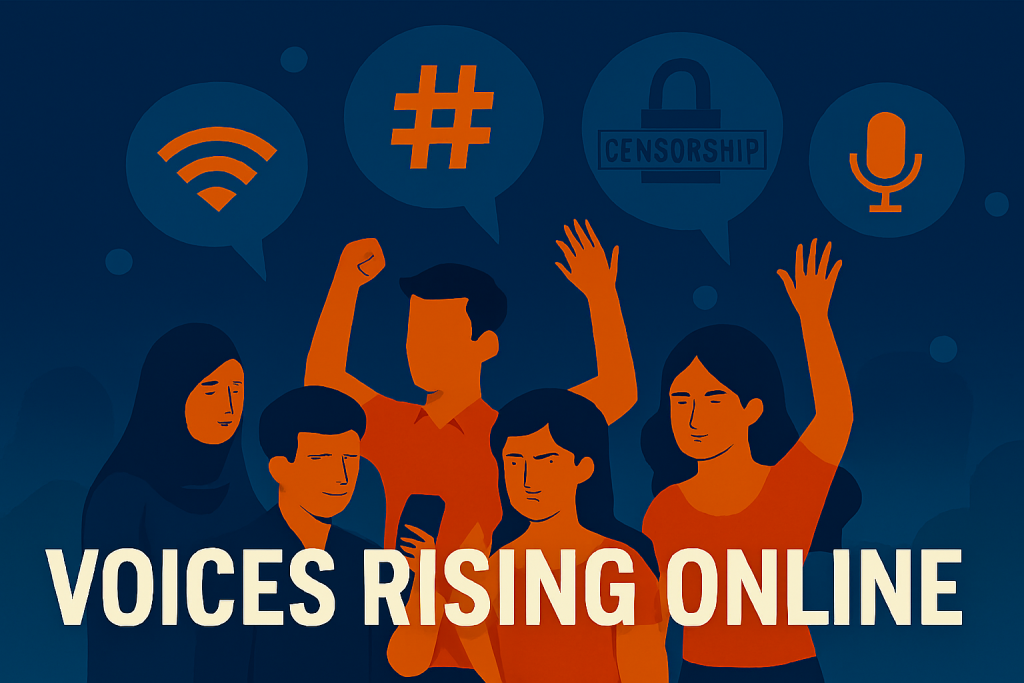
The internet isn’t just a tool anymore, not for young people, anyway. It’s the place where classes happen, friendships form, careers take shape, and voices find an audience. But something has shifted. In 2026, many young Pakistanis are less certain about this space than they used to be. New laws, sudden platform blocks, and debates about who should be allowed online are changing what feels safe to say or share. Meanwhile, tech companies and governments keep rewriting the rules without much input from the people most affected.
So what exactly is changing?
And how can young people navigate this moment without either staying silent or taking unnecessary risks?
This article tries to answer both questions.
Why Young People No Longer Trust the Internet
Ask young people in Karachi, London or Nairobi what worries them most online, and the answers are surprisingly consistent: fake news, hate speech, surveillance, trolling, and the sense that invisible algorithms are deciding what they see. A common frustration runs through recent youth surveys: big decisions about digital life are being made in government offices and corporate boardrooms, far away from the people who will live with the consequences.
In Pakistan, the unease is sharper. Platform slowdowns and outright blocks have happened repeatedly, often around politically sensitive moments. Journalists, activists, and everyday users have faced harassment or legal notices over what they posted. Some have had to deal with investigations under cybercrime laws that are not always clear or predictable.
Young people find themselves caught between two messages. On the one hand, they’re encouraged to “go digital,” learn online skills, and build tech careers. On the other hand, they see real examples of posts, tweets, or videos landing people in trouble. It creates a kind of background noise an anxiety that never quite goes away.
The question many ask themselves is simple: “I need to be online, but how safe is it really?”
Pakistan’s New Social Media Laws and Age Restrictions in 2026
PECA 2016 and the 2025 Amendments Explained
Pakistan’s main cybercrime law is known as the Prevention of Electronic Crimes Act, or PECA. It was first passed back in 2016. Earlier this year, Parliament approved amendments that have drawn strong reactions from journalists, lawyers, and rights groups.
The updated law introduces a new criminal offence related to “false and fake information,” with penalties that can include up to three years in prison and fines. Critics worry that the language is too vague. What counts as “false”? Who decides? The concern is that authorities could use the law against satire, criticism, or investigative journalism, not just deliberate disinformation campaigns.
Another key change is the creation of a Social Media Regulation and Protection Authority. This body will have the power to order platforms to remove or block content. It will work alongside the Pakistan Telecommunication Authority (PTA), which already has a history of blocking websites and apps. Since 2024, for example, the platform X (formerly Twitter) has been blocked or throttled several times. For young users who rely on X to follow news or join public debates, these disruptions have real consequences.
Inside the Under‑16 Social Media Ban Proposal
During 2025, a separate bill appeared in the Senate: the Social Media (Age Restriction for Users) Bill. Its central idea was to ban social media accounts for anyone under 16 in Pakistan. The proposed penalties were serious:
- Platforms that allow underage accounts could face fines from Rs50,000 up to Rs5 million.
- People who help minors open accounts with fake details could be fined or imprisoned for up to six months.
- The PTA would be given the job of tracking down and removing accounts held by under‑16s.
Supporters of the bill argued it would protect younger teenagers from cyberbullying, exploitation, and harmful content. They pointed to similar proposals in countries like Australia and New Zealand.
But civil society pushed back hard. Digital rights organisations, youth advocates, and some politicians called the idea unrealistic and potentially harmful. Their argument was straightforward: teenagers won’t stop using social media just because a law says so. Instead, they’ll lie about their age, switch to VPNs, or move to less regulated apps. That could make them harder to reach with accurate information, support, or education and might push risky behaviour underground where it’s even less visible.
After objections and public debate, parts of the bill were reconsidered. But the appetite for stricter age controls hasn’t gone away. The conversation is clearly not over.
Global Trends in Youth, Social Media Safety, and Age Limits
Pakistan isn’t the only country wrestling with these questions. Around the world, governments are rethinking how social media should work especially for children and teenagers.
Australia has taken one of the hardest lines. Regulators there are pushing platforms to verify ages and prevent under‑16s from having accounts, with serious penalties for companies that don’t comply. Across Europe and parts of North America, similar experiments are underway: age‑verification systems, parental consent rules, and heavy fines for platforms that fail to protect young users.
At the same time, organisations like UNICEF and many child‑rights experts are urging caution. They point out that for many teenagers, especially in countries with limited offline services, the internet is where they find mental‑health information, peer support, educational resources, and communities they can’t access any other way. If laws simply shut doors without building safer, better alternatives, young people may end up more exposed, not less. And if they move to unregulated platforms to get around age bans, the risks of exploitation and harm could actually increase.
Helping Youth Stay Healthy in a Digital World.
Youth Digital Rights and Freedom of Expression Online
Human rights don’t disappear when someone logs into Wi‑Fi. The UN Convention on the Rights of the Child (CRC), which Pakistan has signed and ratified, recognises that children and adolescents have the right to freedom of expression. That includes the right to look for, receive, and share information and ideas “of all kinds,” using any media they choose including digital platforms.
The CRC also protects the right to privacy and the right to access reliable information, especially when it concerns health, development, and well‑being. In recent years, UN bodies and experts have made it clear that these protections extend to the digital environment. Online and offline, the standards are meant to be the same.
Of course, that doesn’t mean “no rules at all.” Governments can restrict certain kinds of content to protect national security, public order, or the rights of others. But for those restrictions to be legitimate under international law, they have to meet a few tests: they must be clearly defined, necessary for a specific purpose, and proportionate. When a law uses broad or vague terms like “fake information” or gives wide blocking powers without meaningful oversight, there’s a higher risk that it will be used to silence criticism or uncomfortable questions, not just genuinely harmful content.
For young people, this isn’t an abstract debate. The first voices to be pushed aside in tightly controlled environments are often youth voices: student journalists, campus organisers, young feminists, volunteers working on sensitive issues. When the rules aren’t clear and the enforcement isn’t transparent, it’s the youngest and least powerful who tend to hold back.
How Censorship and Controls Shape Youth Voices in Pakistan
Legal changes don’t stay in courtrooms. They show up in everyday decisions that young people make without even thinking about it anymore.
Should I post this opinion?
Should I share that article?
Should I use my real name on this petition?
Should I comment publicly on a controversial law or leader?
When platforms suddenly slow down or become inaccessible during politically sensitive events, young people don’t just lose entertainment. They lose access to live information, alternative perspectives, and tools they might use to organise peaceful activities. When they see bloggers, activists, or even meme accounts questioned or charged under PECA.
Many quietly learn an unofficial rule:
“Better not talk about politics. Better not criticize. Better stay small.”
What makes this worse is the lack of transparency. Often, it’s not clear whether a post was removed by the platform’s own content policies, by user reports, or in response to a request from authorities. Because the boundaries are fuzzy, people tend to over‑correct. They delete their own posts, avoid certain topics entirely, or stop engaging not because they’re sure they’ve crossed a line, but because they’re afraid they might have. That’s self‑censorship, and it doesn’t require enforcement. Fear does the work on its own.
How Young People Can Stay Safe Online Without Going Silent
Walking away from the internet entirely isn’t realistic for most young people and it would close off real opportunities. A smarter goal is to stay active in ways that are more thoughtful and less risky.
Digital Security and Privacy Basics for Pakistani Youth
Start with the basics. Use strong, unique passwords for your main accounts, and turn on two‑factor authentication wherever you can. This simple step blocks a lot of common attacks.
Check your privacy settings regularly on apps like Instagram, TikTok, WhatsApp, and X. Limit what strangers can see about your profile, posts, and contact details. Don’t share highly personal information like your exact location, daily routines, or family details on public profiles, especially if you comment on sensitive or controversial topics.
Smarter Posting: What to Share and What to Avoid
Stay away from content that calls for violence, encourages hatred toward specific groups, or threatens individuals. That kind of content is risky almost everywhere, legally and ethically, and it undermines genuine causes.
When you share news or political updates, try to cross‑check the information from more than one credible source. Be clear when you’re quoting facts and when you’re giving your own analysis or opinion. If you’re posting about a sensitive issue, keep a record of where your information came from screenshots, links, dates. This can help show that you acted in good faith if someone later misinterprets your intentions.
Safer Ways to Express Your Opinions Online
Focus on discussing ideas, policies, and patterns rather than attacking named individuals without solid evidence. For example, saying “many students are worried about tuition fees and job prospects” is often more constructive and safer than singling out a specific person.
Use formats that let you raise important issues without exposing vulnerable people. Anonymous stories, composite examples, art, poetry all of these can be powerful ways to highlight problems without putting specific individuals at unnecessary risk.
Try to participate in moderated spaces, online workshops, youth dialogues, campaigns organised by reputable groups where there are clear ground rules and some level of support if something goes wrong.
Diversifying Your Platforms and Support Networks
Don’t rely on a single app for everything. Follow news through email newsletters, websites, offline contacts, and community groups as well. That way, if one platform goes down or gets blocked, you’re not completely cut off.
For more sensitive discussions or organising work, use end‑to‑end encrypted apps and closed groups. Be selective about who you add, and pay attention to group security settings.
If online harassment or threats escalate, save evidence: screenshots, message logs, dates and times. Talk to someone you trust, and where possible, reach out to a digital‑rights organisation, student body, teacher, or legal adviser who can offer guidance.
This article is meant to inform and raise awareness. It’s not a substitute for professional legal advice.
What Pakistani Youth Should Ask of Governments and Social Media Platforms
Young people aren’t just “users.” They’re citizens, students, workers, and future decision‑makers. Many youth‑focused consultations around the world have highlighted similar priorities: clear and fair rules, genuine protection from harm, and a real say in the policies that shape their digital lives.
In Pakistan, that could look like a few concrete demands:
Laws about online speech should use precise language and target genuinely harmful behaviour, not broad, fuzzy categories like “annoying” or “fake” content. When the terms are too vague, they can be applied to almost anything including legitimate criticism or satire.
Content‑blocking and takedown decisions should be subject to meaningful oversight. That might mean judicial review, or independent bodies that can review complaints and push for transparency. Leaving all the power with a single authority creates real risks.
Youth online safety policies should focus on digital literacy, mental‑health support, and platform accountability, not just blanket age bans that are easy to bypass and may do more harm than good.
Young people can work with student unions, youth councils, and civil society organisations to respond to draft laws, attend public hearings, and promote informed, constructive debate on digital rights. Even small actions, signing a statement, joining a discussion, explaining the issues to peers can influence how policies evolve over time.
A Youth‑Led Path Toward a Safer and Freer Internet
The online world that young Pakistanis use today is changing fast. New cybercrime amendments, age‑restriction proposals, and shifting platform policies are redefining what feels safe or possible to say. Some of these developments come from a genuine desire to reduce harm. Others, intentionally or not, risk shrinking the space for honest conversation.
The challenge for this generation isn’t to choose between safety and freedom. It’s to insist on both. Young people deserve real protection from bullying, exploitation, and manipulation. They also deserve room to question, critique, organise, and imagine better futures for themselves and their country.
No single student or young professional can control every law, platform decision, or AI moderation tool. But each person can decide how carefully they post, how they protect their accounts, and how they stand with others. By staying informed, practising smart digital habits, and using their voices in thoughtful, strategic ways,
Pakistan’s youth can help shape an internet where being young isn’t a vulnerability it’s a source of energy, creativity, and change.

Qaseem ul Hassan
Qaseem-ul-Hassan, an International Relations graduate from National Defence University, Islamabad, is a visionary youth leader and social scientist. As Founder and President of Nojwan.com, he is dedicated to empowering young voices and building resilient, inclusive movements.